
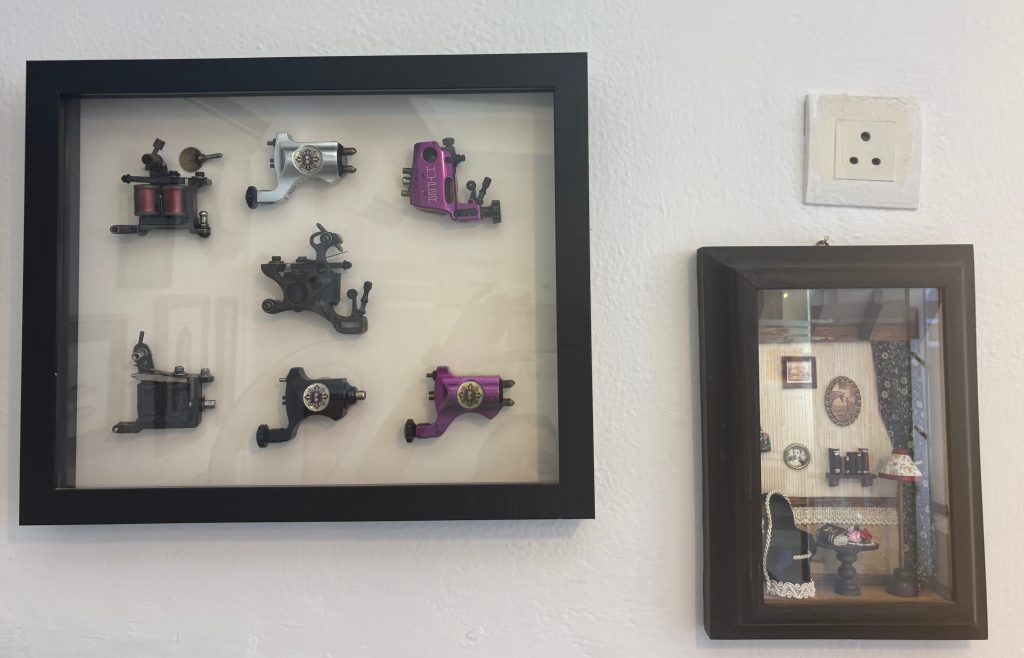
Tattooing Is Old. Machines Aren’t.
Tattooing has existed for thousands of years — across cultures, continents, and communities. But the machines we use today? They’re relatively modern.
The journey from hand tools to the machines you see in studios today is surprisingly recent — and constantly evolving.
The Beginning: Before Machines
Before electric machines, tattoos were done manually.
Different cultures had their own methods:
• Hand-tapping (still practiced in parts of Asia)
• Bone or wood tools dipped in ink
• Repetitive hand techniques to push ink into skin
These methods were slower, but incredibly skilled — and many artists still use them today.
1891: The First Electric Tattoo Machine
The first electric tattoo machine was invented by Samuel O’Reilly in New York.
Interestingly, it was inspired by Thomas Edison’s electric pen — a device originally created for duplicating documents.
O’Reilly modified it so that instead of writing on paper, it could puncture skin and deposit ink.
That invention changed tattooing forever.
The Rise of Coil Machines
After O’Reilly, the design evolved into what we now call coil machines.
These became the standard for decades.
How they worked:
• Electromagnetic coils move a needle up and down
• The machine creates that classic “buzzing” sound
• Artists could adjust speed and power depending on the work
Coil machines are still widely used today, especially for bold lines and traditional work.
Rotary Machines: A Smoother Alternative
Rotary machines came later, offering a quieter, more fluid motion.
Instead of coils, they use a rotating motor to move the needle.
Why artists like them:
• Less vibration
• Smoother movement
• More consistent for shading and fine work
They’re often preferred for fine line, minimal, and detailed tattoos.
Cartridge Systems: The Modern Setup
Today, many artists use cartridge-based machines.
These allow:
• Easy needle changes
• Better hygiene
• More flexibility during sessions
Combined with rotary machines, cartridges have made tattooing more efficient and adaptable — especially in studios focusing on custom work.
What Hasn’t Changed
Even though machines have evolved, the core of tattooing hasn’t.
It still comes down to:
• Skill
• Precision
• Understanding skin
• And creating something that lasts
The machine is just a tool.
The art comes from the artist.
From My Chair at Morphology
At the studio, the tools I use are modern — but the approach stays the same.
Clean work. Thoughtful designs.
And making sure every piece is done with intention.
Because no matter how much machines evolve,
the responsibility behind them doesn’t change.
Final Thought
Tattoo machines have come a long way — from hand tools to electric coils to modern cartridges.
But at the end of the day, they all serve the same purpose:
to turn an idea into something permanent.
And that part? Still feels just as real.
📍 Morphology Tattoo Studio, Galleria Market, Gurugram
(Appointment only)
 Morphology Tattoo Studio
Leave a comment